
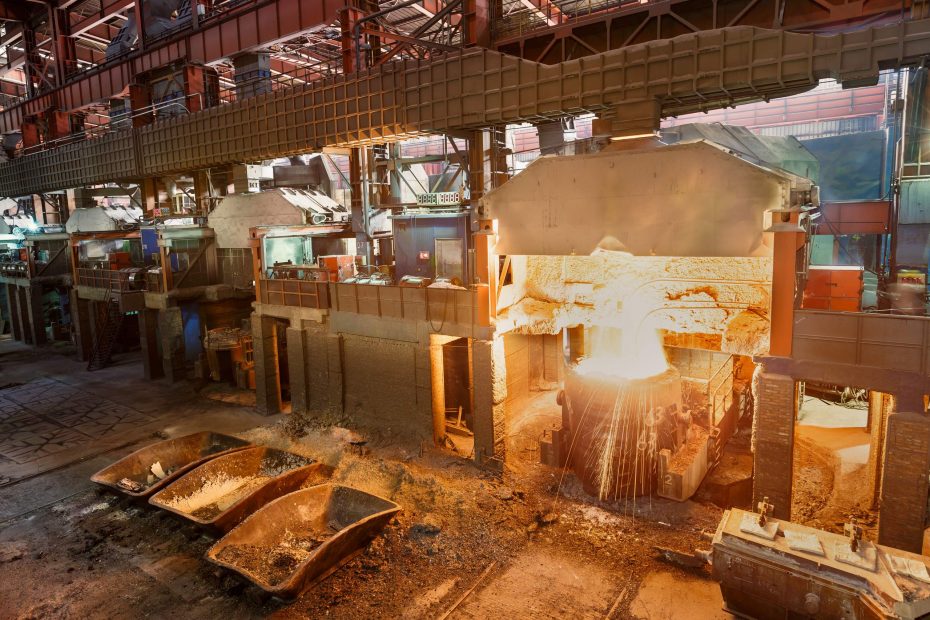
One of the key processes in foundry production is the melting of metal. The metal must be brought to the correct state for pouring into the mold.
The quality of the molten metal can directly affect the mold-filling process, solidification, surface quality, mechanical properties, and the number of defects in the casting.
The importance of temperature control
Almost every aspect of the casting process is influenced by temperature. The molten metal must be hot enough to stay fluid during the filling process, but if it gets too hot, the metal will react more and present other issues.
If the metal is too cold, it may start to solidify before the mold is completely full. This could lead to partially filled or poorly fused castings.
On the other hand, if the metal is too hot, there is a higher risk of oxidation, absorption of gases, reaction with the mold, and other phenomena.
Therefore, finding and maintaining the proper temperature range is an important factor of process control.
Preparation of the charge
Before the metal is melted, the charge must be selected and prepared. Depending on the process, the charge could consist of all new metal, all recycled metal, or a combination of both.
The quality and composition of the charge are important because impurities may have negative effects on the quality of the molten metal.
The charge must be kept consistent from one production cycle to the next to ensure a similar composition of the alloy.
The melting process
Metals must be melted in specific ways, using the correct equipment. The furnace selection depends on several factors, including the metal or alloy being melted, the quantity, energy consumption, and operating conditions.
The melting process involves monitoring the metal as it melts and ensuring that it reaches the required temperature.
The goal is to melt the metal, but not just to melt it. The resulting molten metal must be ready for further processing.
Removing unwanted material
The molten metal may contain oxides, inclusions, gases, and other unwanted materials. Depending on the alloy and production process, different treatments may be applied to clean the metal.
The removal of unwanted material reduces the risk of inclusions and other types of defects.
Clean metal also contributes to a more consistent casting process.
Measurement of the molten metal temperature
Temperature measurement is another important part of process control in a foundry environment. Modern production facilities use various tools to measure the temperature of the molten metal before and during pouring.
Measuring the temperature helps the operator decide whether the molten metal is in the correct range for the production process.
The temperature should also be measured at the right time. The temperature of the molten metal while still in the furnace is likely to be different from its temperature at a later point in the process.
Controlling the pouring process
Once the metal has reached the correct temperature, it needs to be transferred to the pouring location.
The delay between the metal leaving the furnace and being poured may affect the temperature and condition of the metal.
The pouring process also requires careful control. If the metal is poured too quickly, it may cause splashing, introduce too much air and oxide, and create turbulence.
The relationship between temperature and solidification
After the molten metal enters the mold, it begins to cool and solidify. The cooling rate will influence the properties of the casting.
Cooling may not be uniform because of the varying thicknesses and geometries of the casting, and the contact with the mold.
Understanding how the metal cools and solidifies helps the foundry engineer design better molds and avoid potential issues.
Achieving consistency
A good foundry process relies on repeatable operations. Recording melting temperatures, charge material, treatment process, and pouring conditions can help determine any differences between batches.
If an issue arises in production, the records can be used to analyze whether it was caused by a change in the melting process or temperature control.
Conclusion
Melting metal is more than just a single step in the foundry process. The molten metal affects almost everything that comes after it, from mold filling to solidification and final quality.
Proper control over material preparation, melting, temperature, metal cleanliness, and pouring can help foundries run a more consistent operation and achieve better results.